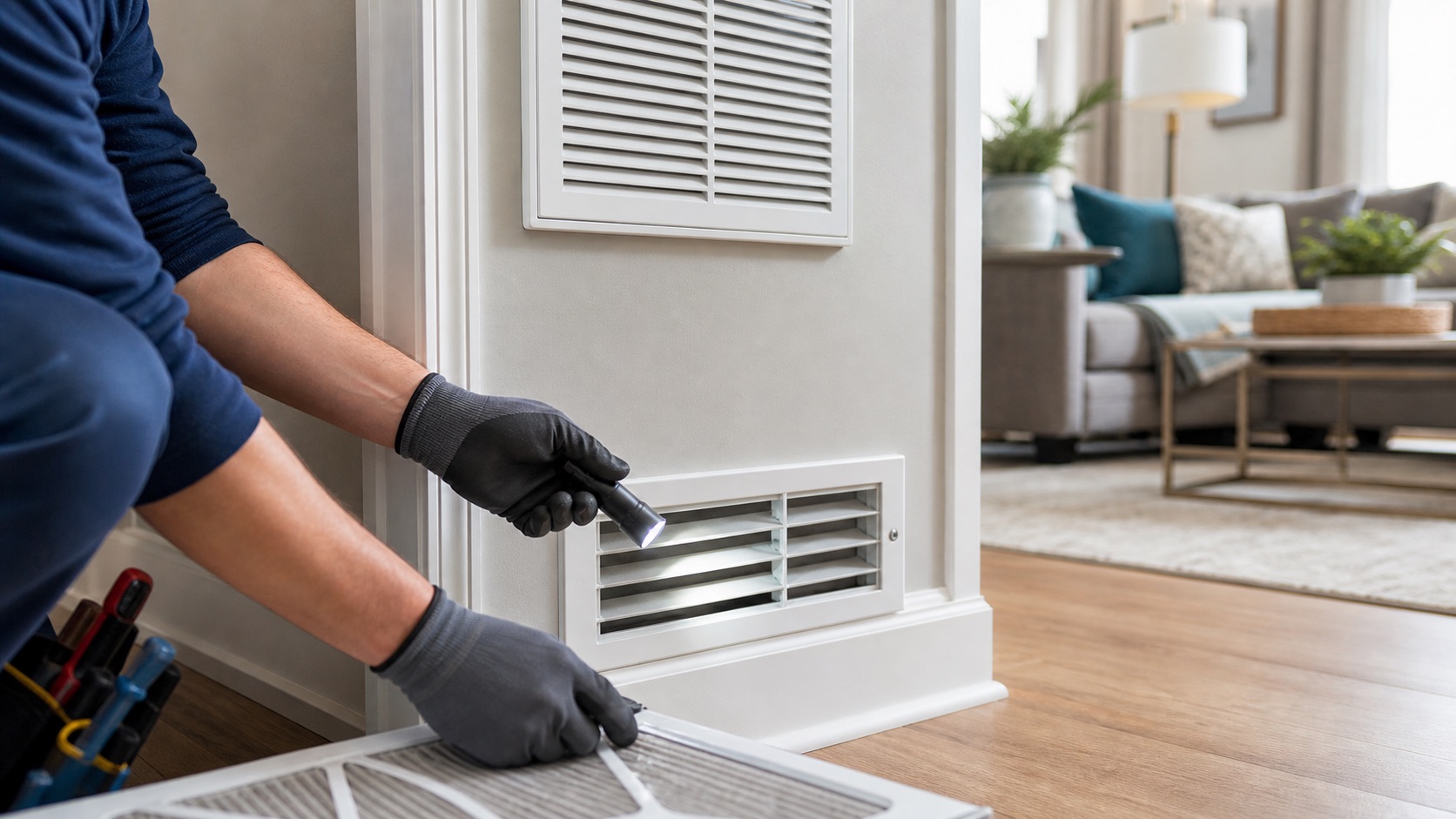
The smell coming from your AC is a clue: musty/moldy points to moisture and mold, an electrical/burning smell means stop and cut power, and a rotten-egg (sulfur) smell can mean a natural gas leak — leave the house and call the gas company. Each odor maps to a different cause and urgency level. Some are a simple filter or drain fix; one or two are emergencies. Here’s how to read what your AC is telling you.
Smell-to-Cause Map
| Smell | Likely cause | Urgency |
|---|---|---|
| Musty / moldy | Mold/mildew from moisture, clogged condensate drain, dirty coil | Fix soon (health) |
| Dirty socks | Bacteria buildup on the evaporator coil (“dirty sock syndrome”) | Clean coil |
| Burning / hot plastic / electrical | Overheating motor, wiring, or component | Stop — cut power |
| Rotten eggs / sulfur | Possible natural gas leak (gas furnace systems) | Emergency — leave, call gas co. |
| Cigarette smoke | Absorbed into filter/coil | Replace filter, clean coil |
| Exhaust / chemical | Possible refrigerant or mechanical issue | Pro diagnosis |
The Two You Must Treat as Emergencies
- Burning/electrical smell: turn the system off at the thermostat and the breaker. Overheating wiring or a motor is a fire risk — same logic as a burning smell from an outlet. Don’t run it until checked.
- Rotten eggs/sulfur: utilities add that smell to natural gas. If you smell it, leave the house and call the gas company from outside — don’t flip switches. (Related: furnace not working emergency.)
The Common, Fixable Smells
Musty/moldy is the most common AC odor and usually means moisture management failed:
- Replace the air filter — a dirty filter traps moisture and odor.
- Check the condensate drain line — a clog lets water sit and grow mold; clear it (and the drain pan).
- Clean the evaporator coil — biofilm on the coil causes musty and “dirty sock” smells.
- Address humidity — a chronically damp system breeds mold.
These overlap with a frozen coil and general AC not cooling issues, since moisture and airflow drive several problems.
When to Call a Pro — and Cost
Call a technician for electrical smells, persistent mold, refrigerant/chemical odors, or anything you can’t trace.
| Work | Typical cost |
|---|---|
| Coil cleaning | $100 – $400 |
| Condensate drain clearing | $75 – $250 |
| Electrical repair | $150 – $600+ |
| Diagnostic visit | $75 – $200 |
If a quote seems off, see HVAC quote seems high; for repeated problems on an old unit, repair or replace.
Frequently Asked Questions
Why does my AC smell musty or moldy? A musty smell almost always means moisture and mold — typically from a dirty filter, a clogged condensate drain line letting water sit, or biofilm on the evaporator coil. Replacing the filter, clearing the drain, and cleaning the coil usually fixes it. Persistent mold smells warrant a professional cleaning.
My AC smells like burning — is it dangerous? Yes, treat it as urgent. A burning or hot-plastic smell points to an overheating motor, wiring, or electrical component, which is a fire risk. Turn the system off at the thermostat and the breaker and have an electrician or HVAC tech inspect it before running it again.
What does a rotten-egg smell from my AC/furnace mean? A sulfur or rotten-egg odor can indicate a natural gas leak, since utilities add that scent to gas. Leave the house immediately, avoid flipping switches, and call your gas company from outside. It can also be a dead animal in ductwork, but always rule out gas first because of the explosion risk.
What is dirty sock syndrome? It’s the foul, dirty-sock smell from bacteria and mold building up on a damp evaporator coil, common when the system cycles between cooling and heating in humid conditions. Cleaning the coil and improving moisture control usually resolves it; a UV light is sometimes added to inhibit regrowth.
How do I get rid of the smell from my AC? Start by replacing the filter, clearing the condensate drain, and cleaning the coil and drain pan — that handles most musty odors. For burning or gas smells, stop and call a pro or the gas company. For stubborn or chemical/refrigerant odors, have an HVAC technician diagnose the source.
Last updated: June 16, 2026. Sources: EPA mold and indoor air guidance; CPSC on gas leaks and electrical fire risk; standard HVAC odor diagnosis; 2026 cost ranges per our HVAC guides. Gas smell = leave and call the gas company.