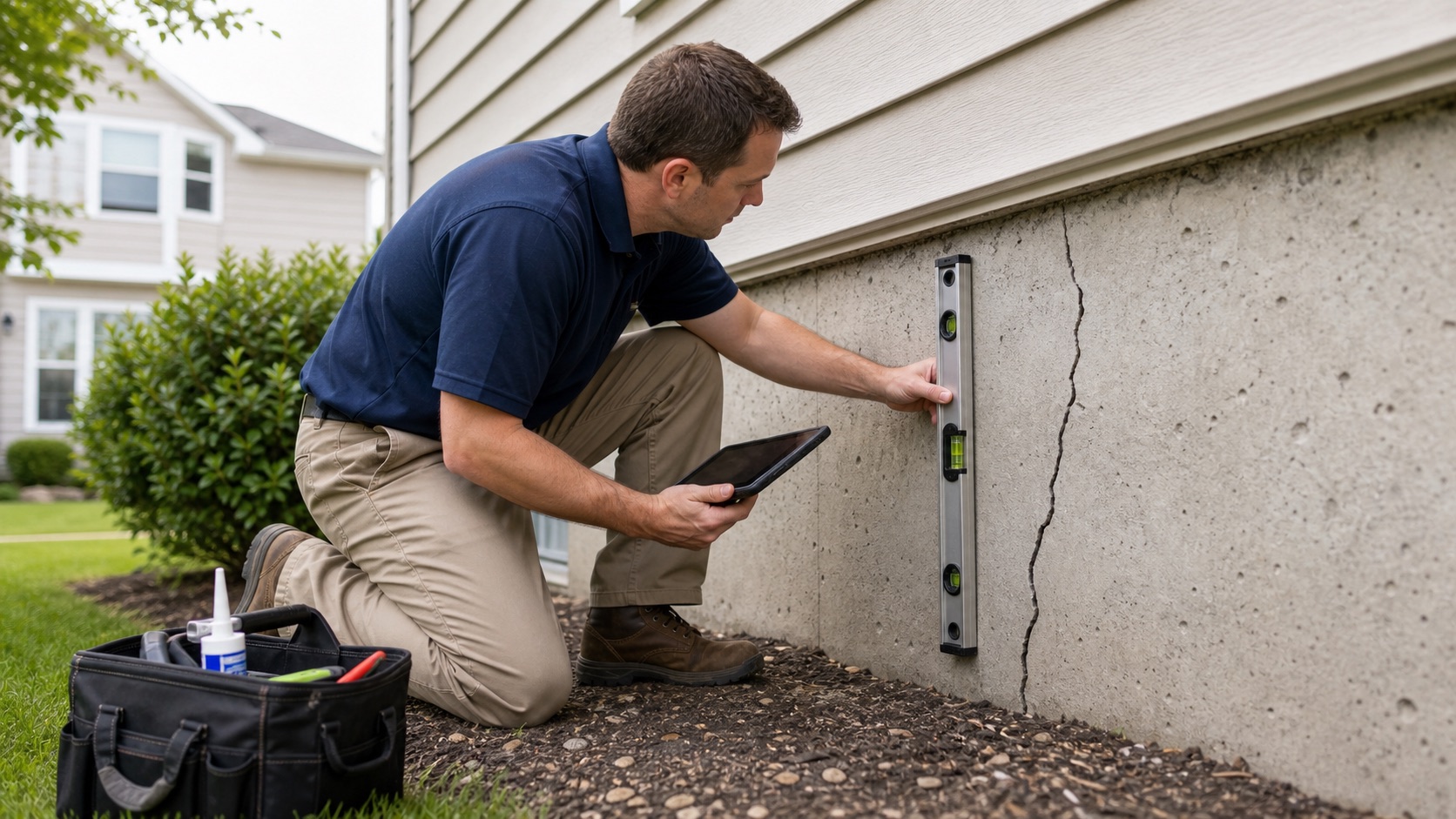
Most homeowners pay between $2,200 and $8,000 for foundation repair, with a national average of around $5,000. Minor crack injection starts near $500, mudjacking runs $1,000–$7,000, and pier-based underpinning costs $1,000–$3,000 per pier — typically $12,000–$30,000 for a full job. Major structural rebuilds can exceed $40,000. Here’s the complete 2026 breakdown, method by method.
How Much Does Foundation Repair Cost by Method?
| Repair Method | Typical Cost Range | Best For |
|---|---|---|
| Crack injection (epoxy/polyurethane) | $500 – $1,500 | Non-structural cracks, leaks |
| Mudjacking / slabjacking | $1,000 – $7,000 | Sunken slabs, minor settling |
| Polyurethane foam lifting | $1,500 – $8,000 | Slab lifting with lighter material |
| Pressed concrete piers | $1,000 – $1,800 per pier | Budget stabilization (common in TX) |
| Steel push piers | $1,500 – $3,000 per pier | Heavy loads, deep stable soil |
| Helical piers | $1,500 – $3,000 per pier | Lighter structures, new additions |
| Bowing wall repair (anchors/carbon fiber) | $4,000 – $15,000 | Basement walls under soil pressure |
| Basement waterproofing | $2,000 – $7,000 | Water-driven foundation problems |
| Full perimeter underpinning | $15,000 – $40,000+ | Severe, whole-house settlement |
Where these numbers come from: Ranges reflect 2026 national pricing aggregated from contractor quote databases and national cost guides, cross-checked against construction labor wage data from the Bureau of Labor Statistics (May 2025 Occupational Employment and Wage Statistics). Labor is typically 50–70% of a foundation repair bill, so regional wage differences move prices significantly.
For crack-specific pricing, see our foundation crack repair cost guide.
How Does Pier Count Drive the Price?
Most structural foundation jobs are priced per pier, and the math is simple:
- Typical pier spacing is 6–8 feet along the affected foundation section.
- Most residential jobs need 8–15 piers — fewer if only one corner settled, more for whole-side or full-perimeter failure.
- Multiply: 10 steel piers × $2,000 average = $20,000. The same job with pressed concrete piers might run $12,000–$15,000.
This is why two quotes for “foundation repair” can differ by $10,000: one contractor may propose 8 piers, another 16. An independent engineer’s report (more below) tells you how many you actually need.
Why Are Texas and Oklahoma Foundation Repairs So Common?
Much of Texas, Oklahoma, and parts of Colorado and the Southeast sit on expansive clay soil. Clay swells when wet and shrinks when dry — and in regions with hot, dry summers and wet winters, the soil under your foundation can move several inches per year. That seasonal cycling cracks slabs, racks door frames, and sinks corners.
The American Society of Civil Engineers (ASCE) has long noted that expansive soils cause billions of dollars in damage to U.S. structures annually — by some estimates more than floods and tornadoes combined. Organizations like the Foundation Performance Association in Houston publish technical guidance specifically because slab-on-clay foundations dominate the region.
If you’re in one of these markets, see our local pricing guides for Houston, Dallas, and Oklahoma City — labor rates and soil conditions shift the numbers meaningfully from national averages.
Should You Pay for an Engineer’s Report First?
For any repair quote over ~$5,000: yes. An independent structural engineer’s evaluation costs $350–$700 and gives you:
- An unbiased diagnosis from someone not selling the repair
- A pier layout and count you can hand to multiple contractors, so bids are apples-to-apples
- Documentation for resale and insurance
Foundation repair companies inspect for free — but the inspector is also the salesperson. An engineer’s report routinely pays for itself by trimming over-specified pier counts. A foundation inspection runs $300–$1,000 depending on scope.
Does Homeowners Insurance Cover Foundation Repair?
Usually no — with one important exception:
- Excluded: Damage from settling, soil movement, expansive clay, drought, tree roots, and poor drainage. These are considered maintenance/earth-movement issues and are excluded from standard HO-3 policies.
- Sometimes covered: Foundation damage caused by a sudden plumbing leak under the slab (a covered peril) may be covered — though insurers often pay for the resulting damage, not the pipe repair itself. Document leaks immediately.
- Flood damage is separate. Foundation damage from flooding requires flood insurance through the NFIP. See FEMA’s flood and foundation guidance for elevation and flood-zone resources.
What Are the Signs You Need Foundation Repair?
Watch for stair-step brick cracks, doors that stick, sloping floors, and gaps around frames. Our guide to the 12 signs of foundation problems covers what’s cosmetic versus structural. Water problems often come first — moisture issues that cause mold also drive foundation movement (the EPA’s mold guidance explains why dampness needs fixing within 24–48 hours).
How Can You Avoid Overpaying?
- Get an engineer’s report before signing anything over $5,000.
- Collect 3 bids against the same pier plan — see how to compare contractor bids.
- Never pay a large deposit — foundation work rarely justifies more than 10–30% upfront. See how much deposit is normal.
- Verify the license — check state records via our contractor license verification guide.
- Demand a transferable lifetime warranty on piers — it protects resale value.
- Fix drainage first — gutters and grading ($0–500) prevent many repairs entirely.
Frequently Asked Questions
How much does foundation repair cost on average? About $5,000 nationally, with most repairs between $2,200 and $8,000. Crack injection starts near $500; pier-based underpinning typically runs $12,000–$30,000 for 8–15 piers; full structural rebuilds can exceed $40,000.
How many piers does a foundation repair need? Most jobs need 8–15 piers spaced 6–8 feet apart along the affected section. An independent engineer’s report ($350–$700) determines the real number — and prevents contractors from over-specifying.
Does homeowners insurance cover foundation repair? Not for settling or soil movement — those are excluded. Damage caused by a sudden plumbing leak under the slab is sometimes covered. Flood-related damage requires separate flood insurance (see FEMA).
Why is foundation repair so expensive in Texas? Expansive clay soil swells and shrinks with moisture, moving foundations seasonally. ASCE estimates expansive soils cause more property damage annually than most natural disasters, and TX/OK sit on some of the worst of it.
Is foundation repair worth it? Yes — unrepaired foundation problems compound into water intrusion, framing damage, and a major hit to resale value. A documented, warrantied repair protects the home’s marketability.
Sources: U.S. Bureau of Labor Statistics, Occupational Employment and Wage Statistics (May 2025) · FEMA — foundation and flood-zone guidance · American Society of Civil Engineers · EPA — Mold and Moisture
Last updated: June 2026. National averages for informational purposes; always get a written quote from a licensed structural/foundation contractor.