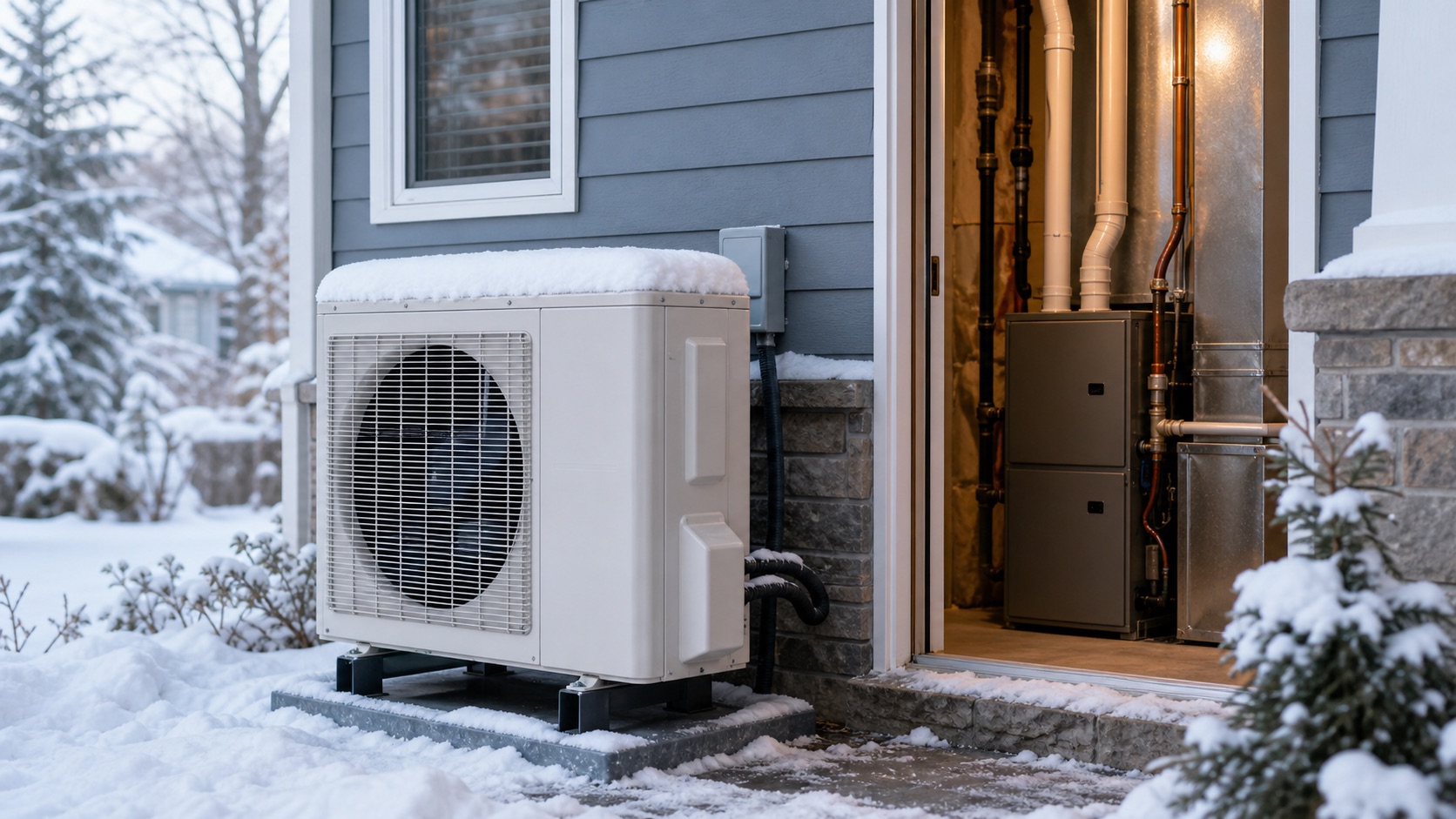
Modern cold-climate heat pumps now work well into sub-freezing temperatures, but in very cold regions the smartest setup is often a “dual-fuel” system — a heat pump for most of the season with a gas furnace backup for the coldest stretches. The old “heat pumps don’t work in the cold” rule applied to older units; today’s choice depends on how cold your winters get, your electricity vs. gas prices, and whether you want backup heat. Here’s how to decide.
The Three Options for Cold Climates
| System | How it heats | Best when |
|---|---|---|
| Cold-climate heat pump | Pulls heat from outside air (electric) | Mild-to-moderate winters; high gas prices; want one system for heating + cooling |
| Gas furnace | Burns gas to make heat | Very cold winters; cheap gas; existing gas line |
| Dual-fuel (hybrid) | Heat pump + furnace backup | Cold climates wanting efficiency and reliable backup |
A heat pump also provides cooling in summer, so it can replace both your furnace and AC — relevant when you’re already weighing central air vs. heat pump.
Do Heat Pumps Really Work in the Cold?
Yes — cold-climate (sometimes “ccASHP”) heat pumps are rated to deliver useful heat well below freezing, many down to around 5°F or lower, though efficiency drops as it gets colder. The watch-outs in cold regions:
- Efficiency falls at very low temps, so heating costs rise on the coldest days.
- Backup heat (electric strips or a furnace) kicks in during extreme cold, and electric backup is expensive.
- Sizing and a quality cold-climate model matter — this is not a job for a guessed install (how to read an HVAC quote).
The Dual-Fuel Sweet Spot
In genuinely cold climates, dual-fuel often wins: the heat pump handles the milder majority of the season efficiently, and the gas furnace takes over below a “switchover” temperature where gas becomes cheaper or the heat pump struggles. You get efficiency most of the time and reliable heat in a deep freeze — and full AC in summer.
Cost and Operating Considerations
| Factor | Heat pump | Furnace |
|---|---|---|
| Equipment install | Often higher (esp. cold-climate models) | $4,000 – $9,000 |
| Runs on | Electricity | Gas (or propane/oil) |
| Provides cooling? | Yes | No (needs separate AC) |
| Rebates/credits | Often eligible | Limited |
| Cold-day operating cost | Rises in extreme cold | Steady |
Heat pumps frequently qualify for federal and utility rebates/tax credits, which can offset the higher install. Check current incentives before deciding. Costs in context: furnace replacement cost, AC replacement cost, and the repair-or-replace framework if you’re replacing aging equipment.
Frequently Asked Questions
Do heat pumps work in cold climates? Yes. Modern cold-climate heat pumps are designed to deliver heat well below freezing, many rated down to around 5°F or lower. Efficiency declines as temperatures drop, so the coldest days cost more to heat, and most cold-region installs include backup heat for extreme cold.
Is a heat pump or furnace better for a cold climate? It depends. A cold-climate heat pump is efficient and also cools in summer, which suits moderate winters and high gas prices. A gas furnace gives steady, strong heat in very cold winters with cheap gas. In genuinely cold regions, a dual-fuel system that pairs both is often the best of both worlds.
What is a dual-fuel (hybrid) system? It combines a heat pump with a gas furnace. The heat pump heats efficiently during milder weather, and below a set switchover temperature the furnace takes over for reliable heat. It also provides air conditioning in summer, making it a strong choice for cold climates that still want efficiency.
Are heat pumps more expensive to run than a furnace? Often cheaper for much of the season because they move heat rather than burn fuel, but operating cost rises in extreme cold as efficiency drops and backup heat engages. The comparison hinges on your local electricity vs. gas prices and how cold your winters get.
Do heat pumps qualify for rebates? Frequently, yes. Heat pumps often qualify for federal tax credits and utility rebates that can meaningfully offset their higher install cost. Incentives change over time, so confirm current federal and local programs with your contractor or utility before you buy.
Last updated: June 15, 2026. Sources: ENERGY STAR cold-climate heat pump guidance and ratings; U.S. Department of Energy on heat pumps and dual-fuel systems; 2026 cost ranges per our HVAC guides. Confirm current rebates before purchasing.