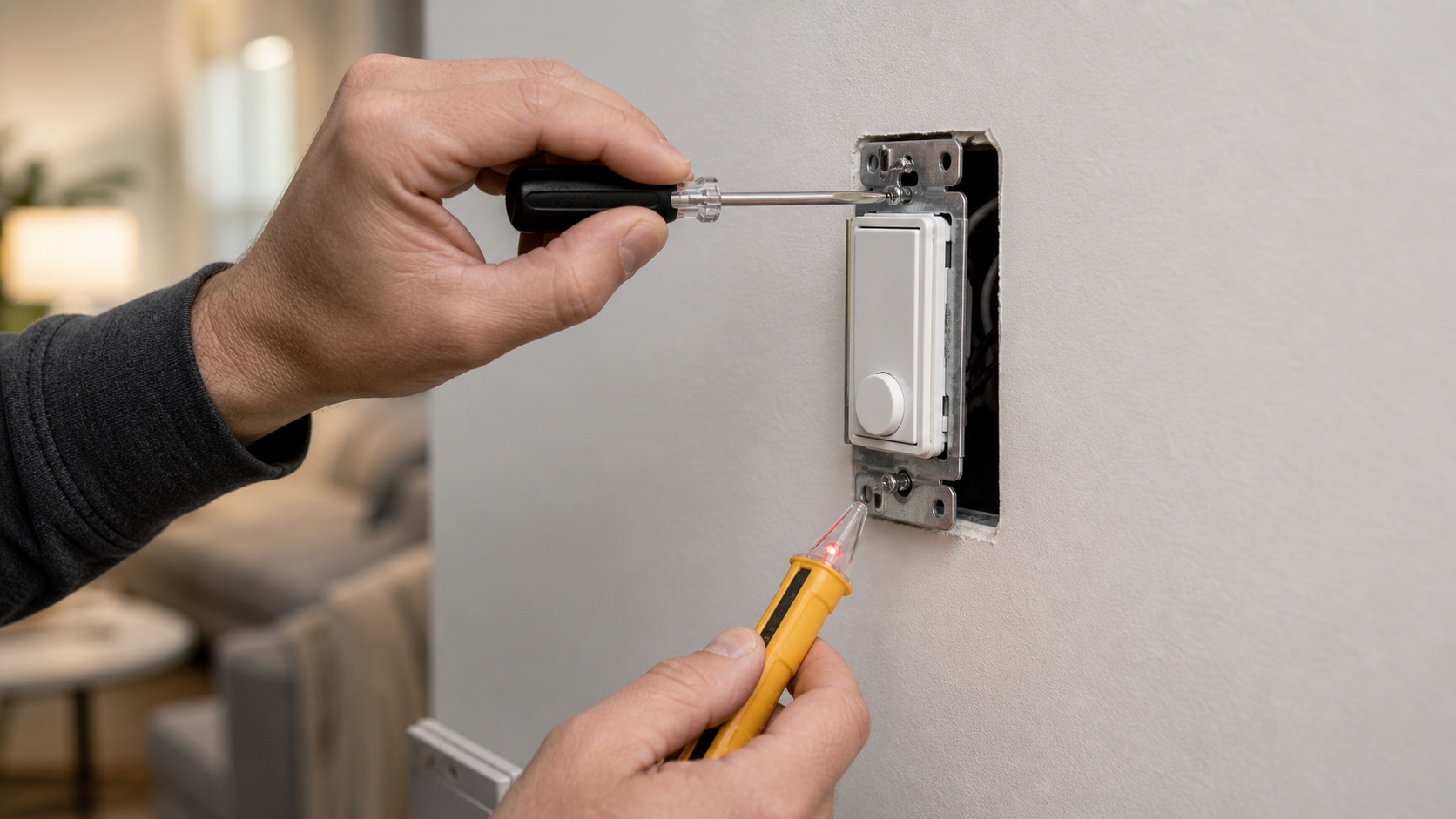
A buzzing dimmer is usually a harmless compatibility issue — non-dimmable or mismatched LED bulbs vibrating at the dimmer’s switching frequency — but a buzzing standard on/off switch more often signals a loose or worn connection that can overheat, which is a fire risk worth checking. Telling the two apart is straightforward. Here’s what causes the hum, which buzzes are normal, and which ones mean you should cut power and call an electrician.
Dimmer Buzz vs. Switch Buzz
| What’s buzzing | Most likely cause | Concern level |
|---|---|---|
| Dimmer + LED bulbs | Non-dimmable or incompatible LEDs, or dimmer not rated for LED | Low (usually) |
| Dimmer at certain levels | Bulb filament/driver vibration | Low |
| Standard on/off switch | Loose wiring, worn switch, overload | Higher — check it |
| Buzz + heat or burning smell | Loose/arcing connection | Stop — fire risk |
| Whole-house or panel buzz | Different issue — see panel buzzing | Pro |
The Common (Harmless-ish) Dimmer Buzz
Most dimmer noise comes from LED compatibility:
- Use dimmable LED bulbs — many cheap LEDs aren’t dimmable and will buzz or flicker.
- Match the dimmer to LEDs — older dimmers were made for incandescent loads; install a LED/CFL-compatible dimmer.
- Check the load rating — too many high-wattage bulbs (or too few for the dimmer’s minimum) causes hum.
- Try a different bulb brand — some LED drivers simply hum on a given dimmer; swapping brands often fixes it.
This kind of buzz is annoying but generally not dangerous. It overlaps with whole-house flickering when bulbs and dimmers mismatch.
The Buzz You Shouldn’t Ignore
A standard switch that buzzes, feels warm, crackles, or smells hot points to a loose or failing connection inside — the same arcing/heat path behind a burning smell from an outlet. Loose connections generate heat and can ignite. Turn the circuit off and have it checked — don’t keep using it.
What to Do
- Dimmer + LEDs buzzing: swap to dimmable, compatible bulbs and a LED-rated dimmer (a DIY-friendly fix if you’re comfortable; otherwise an electrician).
- Switch warm/hot, crackling, or smelling: cut power at the breaker and call an electrician.
- Never keep using a switch that’s hot to the touch.
| Work | Typical cost |
|---|---|
| LED-compatible dimmer (part) | $20 – $50 |
| Electrician replace switch/dimmer | $120 – $250 |
| Repair loose/burnt wiring | $150 – $500+ |
| Diagnostic visit | $75 – $200 |
If a quote seems high, get it in writing and a second opinion.
Frequently Asked Questions
Why is my dimmer switch buzzing? Most often it’s an LED compatibility issue: non-dimmable or mismatched LED bulbs, or a dimmer that isn’t rated for LED loads, vibrate at the dimmer’s switching frequency and hum. Using dimmable, LED-compatible bulbs and a modern LED-rated dimmer — and not exceeding its load rating — usually quiets it. Sometimes simply changing bulb brands works.
Is a buzzing light switch dangerous? A standard on/off switch that buzzes can be — it often means a loose or worn connection that generates heat and can arc, which is a fire risk. If the switch is warm or hot, crackles, or smells hot, turn off the circuit and call an electrician. A faint hum from a dimmer with LED bulbs is usually harmless by comparison.
How do I stop my dimmer from buzzing? Replace any non-dimmable bulbs with dimmable, LED-compatible ones, and install a dimmer specifically rated for LEDs. Make sure the total wattage falls within the dimmer’s minimum and maximum load. If it still hums, try a different LED brand, since some drivers simply don’t pair well with a given dimmer.
Should I replace a buzzing switch myself? Swapping a dimmer or switch is a common DIY job if you’re comfortable working safely with the power off at the breaker and following code — but if the switch is hot, smells burnt, or you find scorched or loose wiring, that’s a job for an electrician. When in doubt, or if your area requires a permit, hire a pro.
Why does my switch buzz but the dimmer doesn’t? A standard switch has no electronic dimming circuit, so a buzz from it usually comes from a mechanical or connection problem — a worn switch, loose terminal, or an overloaded circuit — rather than bulb compatibility. That makes a buzzing standard switch more concerning than a humming dimmer and worth inspecting for heat and loose wiring.
Last updated: June 17, 2026. Sources: ESFI on switch/wiring safety and overheating; ENERGY STAR on dimmable LED compatibility; 2026 cost ranges per our electrical guides. Cut power before replacing any switch; a hot switch is an emergency.