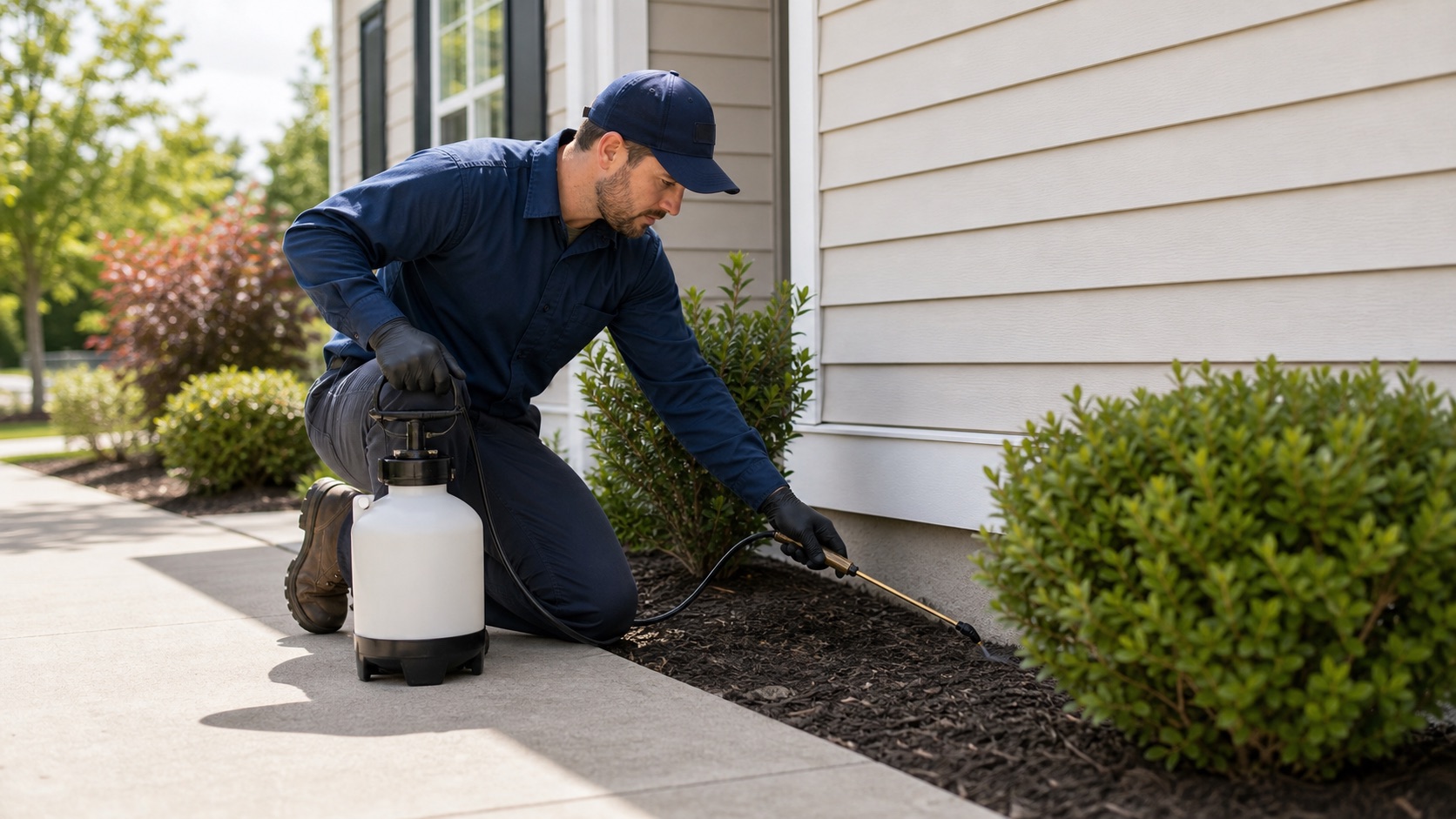
Most homeowners pay $100 to $300 for a single pest control visit, or $400 to $950 per year for a recurring plan. One-time general treatments average around $250, monthly plans run $40–$75 per month, and specialized jobs like termites or bed bugs can cost $1,000 to $5,000+. Price depends on the pest, infestation severity, home size, region, and whether you choose one-time or ongoing service.
How Much Does Pest Control Cost by Service Type?
| Service | Typical Cost |
|---|---|
| Single/one-time visit | $100 – $300 |
| Initial visit (inspection + first treatment) | $150 – $500 |
| Monthly plan | $40 – $75/mo |
| Bi-monthly plan | $50 – $100/visit |
| Quarterly plan | $100 – $300/visit |
| Annual plan (total) | $400 – $950/yr |
| Emergency/same-day visit | $150 – $500 |
Most companies charge a higher initial visit fee because the first appointment includes a full inspection, identifying entry points, and a heavier first treatment. Follow-up visits on a plan are shorter and cheaper.
How Much Does Pest Control Cost by Pest?
| Pest | Treatment Cost | Typical Approach |
|---|---|---|
| Ants | $150 – $500 | Baiting + perimeter treatment |
| Cockroaches | $150 – $600 | Gel baits, IGRs, 2+ visits |
| Termites | $500 – $3,000+ | Liquid barrier, bait, or fumigation |
| Bed bugs | $300 – $5,000 | Heat or multi-visit chemical |
| Rodents (mice/rats) | $200 – $600 | Trapping + exclusion sealing |
| Bees/wasps | $100 – $700 | Nest removal (height adds cost) |
| Mosquitoes | $75 – $150/treatment, $300–$500/season | Yard barrier sprays, larvicide |
| Fleas | $150 – $400 | Interior treatment + IGR, 2 visits |
| Spiders | $150 – $450 | Web removal + perimeter treatment |
| Ticks | $100 – $400 | Yard treatment, often seasonal |
Where these numbers come from: Ranges reflect 2026 national pricing aggregated from contractor quote databases and national cost guides, cross-checked against pest control worker wage data from the Bureau of Labor Statistics (May 2025 Occupational Employment and Wage Statistics). Labor and route time are the biggest cost drivers, so prices run higher in high-wage metros and lower in rural areas.
What Determines Pest Control Cost?
- Type of pest. A trail of ants and a termite colony are different problems by an order of magnitude. Wood-destroying insects and bed bugs require specialized equipment, more product, and more technician time.
- Severity of infestation. An early problem may be solved in one visit; an established roach or rodent population needs multiple treatments plus exclusion work.
- Home size. Most quotes scale with square footage (more product, more time) and, for termites, with the linear feet of your foundation.
- Region and climate. Warm, humid climates have year-round pest pressure. Homes in the Gulf South and Florida typically need recurring service, while northern homes can often get away with seasonal or one-time treatments.
- Treatment method. Heat treatment, tent fumigation, and bait-station systems cost far more than a standard spray-and-bait visit.
- Accessibility. Crawl spaces, attics, wall voids, and high nests add labor time.
One-Time vs. Recurring Pest Control: Which Should You Buy?
The honest answer: your climate decides.
- One-time treatment ($100–$500) is the right call for an isolated, identifiable problem — a wasp nest, a single ant invasion after rain, a mouse that got in during fall. If pests aren’t a recurring fact of life where you live, don’t pay for a subscription.
- Recurring plans ($400–$950/yr) earn their keep in high-pressure climates. In Houston or Orlando, roaches, ants, and mosquitoes never take a season off, and a quarterly plan is genuinely cheaper than repeated one-off calls. In Phoenix, scorpion and ant pressure makes ongoing service common too.
- Watch the math: a quarterly plan at $120/visit is $480/year. If you’d realistically only call a pro once a year, that plan costs you 2–4× more than paying per problem.
See our monthly pest control cost guide for a full plan-by-plan comparison.
What Is IPM (and Why Do Good Companies Use It)?
Modern pest control isn’t “spray everything monthly.” Reputable companies follow Integrated Pest Management (IPM) — the approach recommended by the EPA:
- Identify the pest correctly before treating anything.
- Remove what attracts it — food, water, harborage. Fix leaks, seal trash, clear clutter.
- Block entry points — caulk cracks, screen vents, door sweeps.
- Use targeted treatments — baits and crack-and-crevice applications first; broadcast sprays only when needed.
- Monitor and adjust.
IPM matters for your wallet because prevention-focused service fixes the conditions causing infestations instead of selling you chemicals forever. The National Pest Management Association (NPMA) maintains standards and a directory of member companies — a good starting point for finding firms that practice it. Pests aren’t just a nuisance, either: the CDC links cockroaches to asthma and allergies, rodents to disease transmission, and mosquitoes and ticks to a growing list of vector-borne illnesses.
DIY vs. Professional: An Honest Line by Pest
| Pest | DIY Realistic? | Verdict |
|---|---|---|
| Ants (occasional) | Yes | Bait stations ($10–$25) handle most common ants |
| Ants (carpenter) | No | Wood-nesting; needs professional locating/treatment |
| Roaches (light) | Sometimes | Gel baits work if applied correctly and consistently |
| Roaches (German, established) | No | Reproduction outpaces DIY; pros use IGRs + baits |
| Mice (1–2) | Yes | Snap traps + sealing entry points |
| Rats / recurring rodents | No | Requires exclusion work and persistence |
| Termites | Never | Specialized equipment, termiticides, structural stakes |
| Bed bugs | Rarely | Resistance + hiding behavior defeat DIY; foggers make it worse |
| Wasps (small, reachable nest) | Caution | High nests or allergies → call a pro |
| Mosquitoes | Partially | Eliminate standing water yourself; barrier sprays are pro work |
Rule of thumb: if the pest destroys structures (termites), resists retail products (bed bugs, German roaches), or stings in numbers (wasps), pay for professional treatment. For everything else, follow the EPA’s DIY-safe pest control steps first.
How Can You Save on Pest Control?
- Get 2–3 quotes — pricing varies meaningfully between national brands and local operators.
- Choose a recurring plan only if your climate justifies it (see above).
- Bundle pests — one general-pest plan covering ants, roaches, and spiders beats paying per pest.
- Act early — small problems cost $150; established infestations cost $600+.
- Do the prevention yourself — sanitation, sealing, and moisture fixes are free and cut treatment needs.
- Vet the company — confirm state licensing (see our license verification guide) and ask the right questions before signing. More tips in how to find a pest control company near you.
Frequently Asked Questions
How much does pest control cost per visit? $100–$300 for a typical single visit. Initial visits run $150–$500 because they include a full inspection and heavier first treatment. Specialized pests (termites, bed bugs) are priced separately and cost far more.
How much is pest control per year? $400–$950 per year for a recurring plan, depending on visit frequency, home size, and pests covered. Monthly plans average $40–$75/month; quarterly plans $100–$300 per visit.
Is a one-time or recurring pest service better? One-time is fine for isolated problems in mild climates. Recurring plans make sense in warm, humid regions (Gulf South, Florida, desert Southwest) where pest pressure is year-round and repeated one-off calls would cost more.
What is the most expensive pest to treat? Termites and bed bugs. Both can run $1,000–$5,000+ — termites because treatment covers your whole foundation, bed bugs because heat equipment and multiple visits are labor-intensive.
Is professional pest control worth it? For termites, bed bugs, established roach or rodent infestations, and stinging insects — yes. Pros have products and equipment retail stores don’t sell, and prevention is far cheaper than structural damage. See is pest control worth it and signs you need pest control.
Sources: U.S. Bureau of Labor Statistics, Occupational Employment and Wage Statistics (May 2025) · EPA — Do You Really Need to Use a Pesticide? (Safe Pest Control) · CDC — pests and public health · National Pest Management Association
Last updated: June 2026. National averages for informational purposes; always get a written quote from a licensed pest control company.