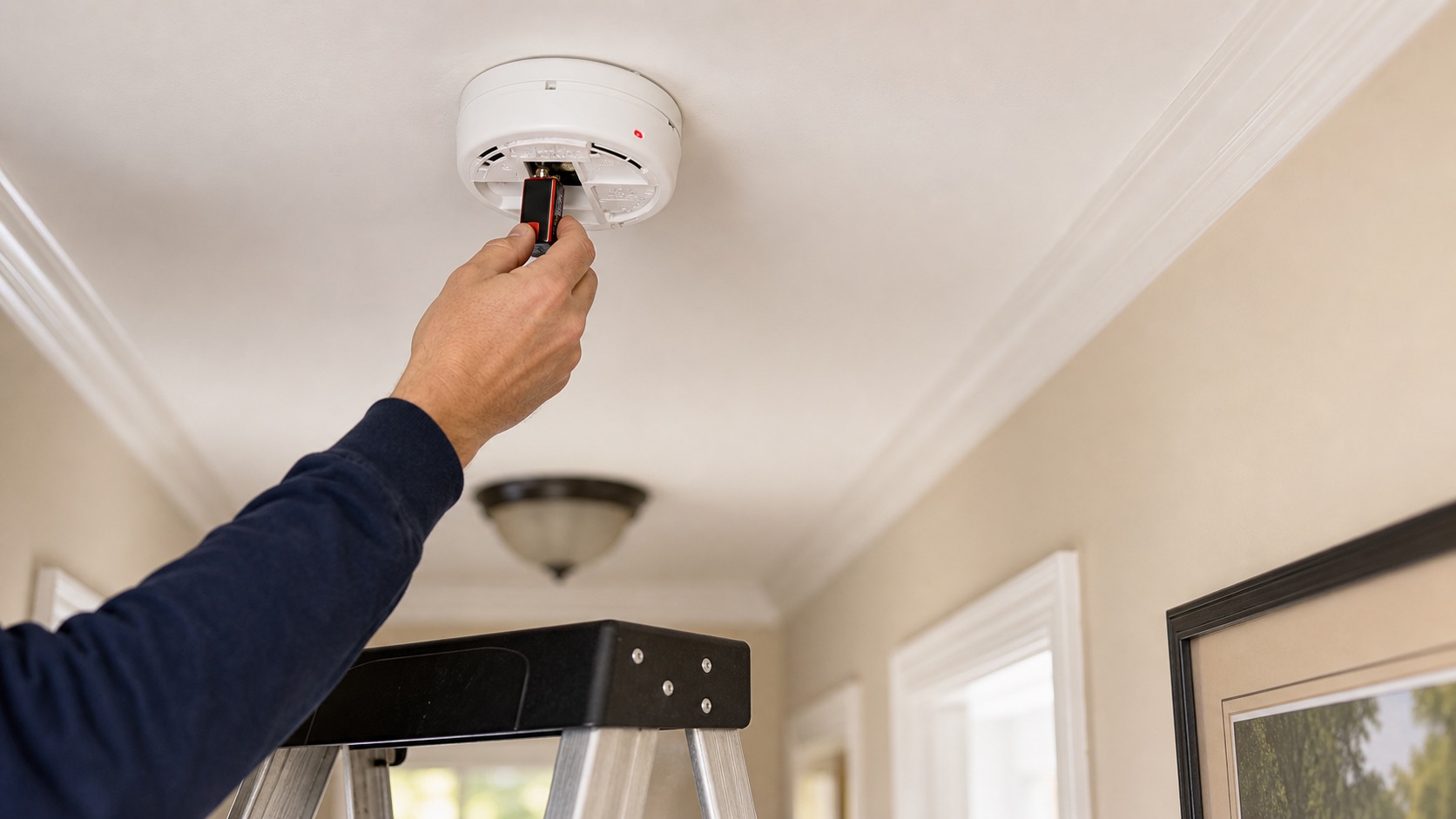
A smoke detector that chirps (a single short beep every 30–60 seconds) almost always means a low battery — and that’s true even for hardwired detectors, which have a backup battery that needs replacing — but a persistent chirp can also mean the unit is at the end of its 10-year life or needs cleaning. Before you yank it off the ceiling at 3 a.m., here’s the quick fix order, why it always seems to start at night, and when chirping means it’s time for a whole new detector.
Chirp vs. Alarm (Know the Difference)
- Chirp = a single short beep every 30–60 seconds → maintenance issue (battery, age, dust).
- Alarm = loud, continuous, repeating blasts → treat as a real fire/CO event until proven otherwise.
This page is about the chirp. If it’s a continuous alarm, get everyone out and verify there’s no fire or CO.
Why It Chirps (Most to Least Common)
| Cause | Fix |
|---|---|
| Low backup battery | Replace the battery (yes, even hardwired) |
| End of life (10 yrs) | Replace the whole detector |
| Dust/debris inside | Vacuum the unit |
| Loose battery/terminal | Reseat the battery |
| Temperature swings | Stabilize room temp |
| Wrong/old battery type | Use the correct fresh battery |
The Fix Order
- Replace the battery — even hardwired units have a backup battery. Use a fresh, correct-type battery.
- Press and hold the test/reset button (~15 sec) after changing the battery to clear residual charge.
- Vacuum the detector — dust and cobwebs trigger chirps and false alarms.
- Check the manufacture date on the back — if it’s 10+ years old, replace the whole unit (sensors degrade; this is the fix people miss).
- Hardwired + interconnected? One bad unit can make others chirp — find the culprit by date/battery.
”Why Does It Only Chirp at Night?”
This classic annoyance is real physics: batteries put out slightly lower voltage when it’s colder, and homes cool down at night — so a marginal battery crosses the low threshold in the early morning hours. The fix is the same: replace the battery (and likely the unit if old).
Hardwired Detectors & Replacement
- Hardwired units still need their backup battery changed (often yearly).
- Replace every 10 years regardless of type — combo smoke/CO units sometimes sooner.
- Replacing a hardwired detector is doable if you’re comfortable cutting power at the breaker and matching the connector; otherwise it’s a quick electrician/handyman job.
| Item | Typical cost |
|---|---|
| Battery | $5 – $20 |
| New detector (battery) | $15 – $40 |
| New hardwired/combo unit | $25 – $70 |
| Electrician replace/install | $100 – $250 |
If detectors are very old or you’re updating the whole home, see signs you need an electrician.
Frequently Asked Questions
Why does my smoke detector keep chirping? A single chirp every 30–60 seconds almost always means a low battery — and hardwired detectors have a backup battery that also needs replacing. Other causes are the unit reaching the end of its ~10-year life, dust inside the sensor, a loose battery, or temperature swings. Start by replacing the battery and pressing the reset button.
Why does a hardwired smoke detector chirp if it’s wired in? Because hardwired detectors include a backup battery that powers them during outages, and that battery still drains over time. When it gets low, the unit chirps just like a battery-only model. Replace the backup battery (often annually), reseat it, and hold the reset button. If chirping continues and the unit is 10+ years old, replace it.
Why does my smoke detector only chirp at night? Batteries produce slightly lower voltage when it’s colder, and homes cool down overnight, so a battery that’s already marginal dips below the low-battery threshold in the early morning — triggering the chirp. It’s not a malfunction; replacing the battery (and the unit if it’s old) resolves it.
How often should I replace a smoke detector? Replace the whole detector about every 10 years, since the sensor degrades over time even if the unit still powers on — combination smoke/CO units may need replacing sooner. Replace or test the battery at least once a year. Check the manufacture date printed on the back; if it’s past 10 years, chirping is your cue to install a new one.
How do I stop the chirping immediately? Replace the battery with a fresh one of the correct type, then press and hold the test/reset button for about 15 seconds to clear any residual charge. Vacuum dust from the unit. If it still chirps, check the date — a detector older than 10 years should be replaced entirely. Avoid just removing the battery and leaving it disabled.
Last updated: June 17, 2026. Sources: NFPA and U.S. Fire Administration on smoke alarm maintenance and the 10-year replacement rule; 2026 cost ranges per our electrical guides. Never disable a detector; replace the battery or unit instead.