Most homeowners pay between $400 and $2,000 to remove a tree, with a national average of around $900. Small trees (under 30 ft) start near $200, while removing a very large tree (80+ ft) can cost $2,000 to $5,000 or more. Tree height is the single biggest price factor, followed by access, condition, and species.
This guide breaks down exactly what you’ll pay in 2026, what’s included in a quote (and what isn’t), why dead trees cost more to remove, and when you need a permit.
How Much Does Tree Removal Cost by Size?
| Tree Size | Height | Trunk Diameter (typical) | Cost Range |
|---|---|---|---|
| Small | Up to 30 ft | Under 12” | $200 – $700 |
| Medium | 30–60 ft | 12–24” | $600 – $1,500 |
| Large | 60–80 ft | 24–36” | $1,500 – $3,000 |
| Very large | 80+ ft | 36”+ | $2,000 – $5,000+ |
Where these numbers come from: Ranges reflect 2026 quotes aggregated from national cost databases and contractor marketplaces, cross-checked against labor costs from the U.S. Bureau of Labor Statistics (May 2025 wage data for tree trimmers and pruners). Local rates vary — see our city guides for Atlanta, Houston, and Portland.
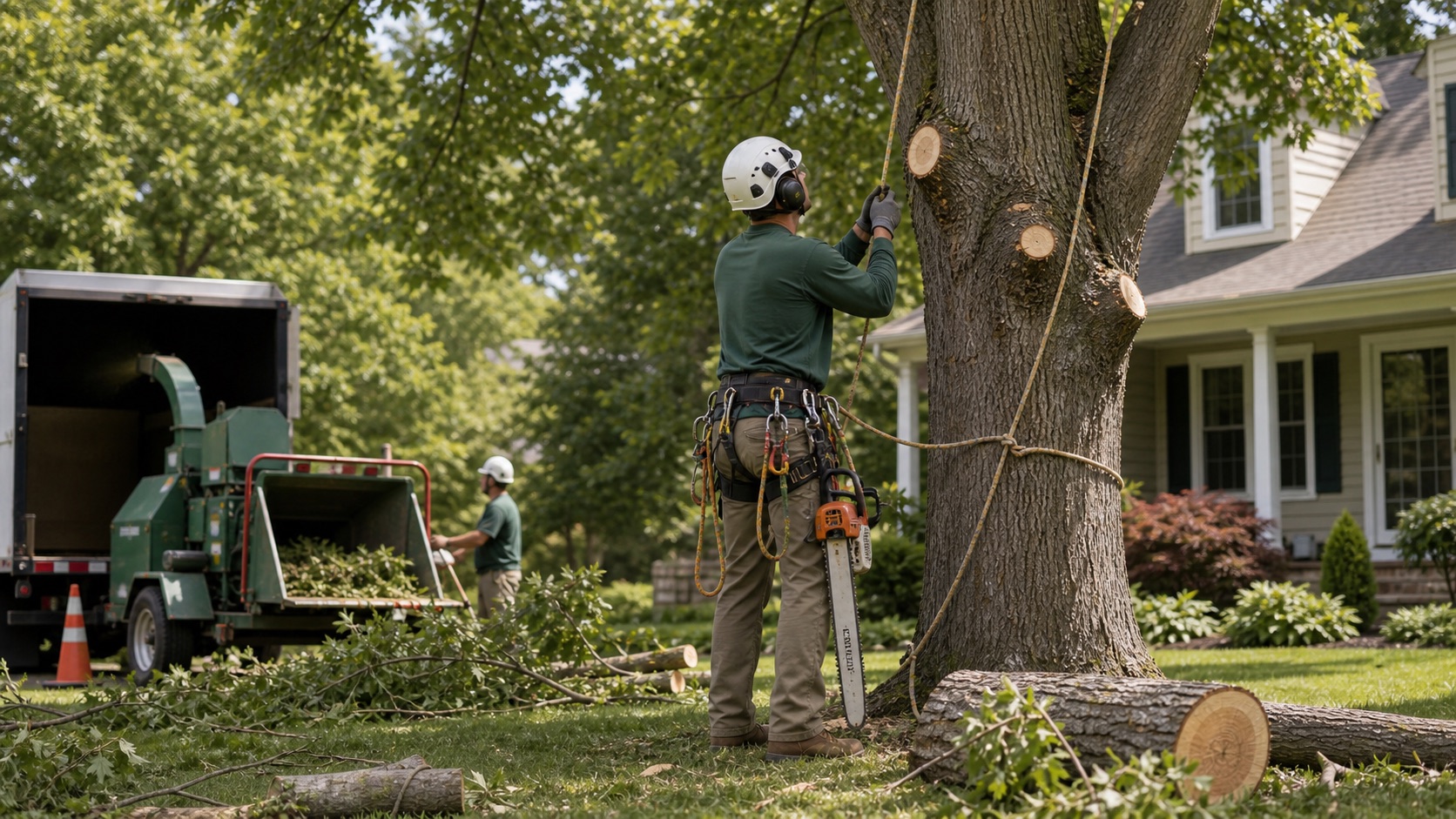
Height matters because taller trees can’t simply be felled in one piece in a residential yard. Crews must climb or use a bucket truck, dismantle the tree section by section, and lower each piece with ropes — every extra 10 feet adds labor hours and risk.
What Determines Tree Removal Cost?
- Size (height and trunk diameter) — the #1 factor. More wood = more cutting, rigging, and hauling.
- Accessibility — a tree in an open front yard might be felled in an hour. A tree wedged between your house and your neighbor’s fence requires piece-by-piece rigging, and a backyard with no equipment access means everything is carried out by hand.
- Position over structures — limbs hanging over a roof, garage, pool, or power lines must be roped down or lifted out with a crane. Crane-assisted removals commonly add $500–$2,000 to the bill.
- Condition — counterintuitively, dead trees cost more to remove, not less. Dead and dying wood is brittle and unpredictable: limbs can snap under a climber’s weight, so crews work slower, use bucket trucks or cranes instead of climbing, and price in the added danger. Storm-damaged or leaning trees carry the same risk premium — see emergency tree removal cost.
- Species and wood hardness — dense hardwoods like oak, hickory, and maple are slower to cut and heavier to haul than pine or poplar. Palms are priced differently (tall but light and predictable).
- Stump work — almost always a separate line item; see below.
- Permits — required in many cities for protected or large trees.
What’s Included in a Tree Removal Quote — and What’s Extra?
A standard quote typically covers felling or dismantling the tree, limbing it, and cutting the trunk into manageable sections. Everything else is often an add-on, so confirm in writing:
| Service | Typically Included? | Cost If Extra |
|---|---|---|
| Felling/dismantling the tree | Yes | — |
| Limbing and cutting trunk into sections | Yes | — |
| Branch chipping | Usually | $50 – $100 |
| Debris and log hauling | Sometimes | $50 – $150 per load |
| Stump grinding | No | $100 – $400 per stump |
| Full stump removal | No | $150 – $600 per stump |
| Wood splitting (firewood) | No | $75 – $150 |
| Crane rental (tight access) | No | $500 – $2,000 |
The most common surprise on the final bill is the stump. “Tree removal” almost never means the stump goes too — ask explicitly.
Do You Need a Permit to Remove a Tree?
In many U.S. cities, yes — and skipping it can mean fines far larger than the removal itself. Cities increasingly protect mature canopy:
- Atlanta requires a permit to remove almost any healthy tree over a minimum trunk size on private property under its tree protection ordinance, with recompense fees for lost canopy.
- Portland regulates removal of trees above certain diameters and in environmental overlay zones.
- Many cities protect designated “heritage” or “significant” species regardless of size.
Your tree service should know local rules, but the permit (and the fine) is usually the homeowner’s responsibility. Check your city’s urban forestry office before cutting, and verify your contractor is properly licensed — see how to verify a contractor’s license. The USDA Forest Service maintains urban forestry resources explaining why cities invest so heavily in protecting mature trees.
Why Is Tree Removal So Expensive?
Because tree work is one of the most dangerous jobs in America. OSHA classifies tree care as a high-hazard industry: workers face falls from height, struck-by injuries from falling limbs, chainsaw contact, and electrocution from power lines — the industry’s fatality rate runs many times the all-industry average.
That risk shows up in your quote three ways:
- Insurance — legitimate tree services carry liability and workers’ comp policies that are expensive precisely because the work is dangerous. A company quoting half the going rate is often uninsured, which makes you liable if a worker is hurt on your property.
- Training — credentialed crews (e.g., ISA Certified Arborists or companies accredited by the Tree Care Industry Association) cost more but dramatically reduce the odds of a crushed roof or a botched rigging job.
- Equipment — bucket trucks, cranes, chippers, and rigging gear represent six-figure investments that get priced into every job.
How Much Do Related Tree Services Cost?
- Trimming/pruning (tree stays): tree trimming cost — $300–$1,000.
- Storm damage / urgent hazard: emergency tree removal cost and fallen tree removal.
- Saving a structurally weak tree: tree cabling and bracing cost.
- Clearing a whole lot: land clearing cost.
Does Insurance Cover Tree Removal?
Usually only when the tree falls on a covered structure (house, garage, fence) in a storm — routine or preventive removal is on you. Full details in is tree removal covered by insurance. If it’s your neighbor’s tree, see who is responsible for tree removal.
How Can You Save on Tree Removal?
- Get 2–3 written quotes — prices for the identical tree routinely vary 50%+ between companies.
- Bundle multiple trees or add stump grinding in the same visit — mobilization is a big share of the cost.
- Schedule in the off-season (late winter) when crews are slow and rates soften.
- Keep the wood for firewood and skip hauling fees.
- Skip the cleanup tier if you can chip or haul debris yourself.
- Vet the company properly — see questions to ask a tree removal company and how to find a tree service near you. Cheap and uninsured is the most expensive option of all.
Frequently Asked Questions
How much does it cost to remove a tree? $400–$2,000 on average, depending mostly on size. Small trees start near $200; very large trees (80+ ft) can exceed $5,000, especially with crane work.
Why do dead trees cost more to remove? Dead wood is brittle and unpredictable — limbs can snap without warning, so crews can’t safely climb and must use bucket trucks or cranes and work more slowly. The added equipment and risk raise the price 20–50% over a comparable healthy tree.
Does tree removal include stump removal? Almost never. Stump grinding ($100–$400) or full stump removal ($150–$600) is a separate charge — confirm it’s in your quote if you want the stump gone.
Does insurance cover tree removal? Typically only if the tree damaged a covered structure (e.g., fell on your house in a storm), not for routine or preventive removal. See is tree removal covered by insurance.
Do I need a permit to remove a tree? Often, yes. Cities like Atlanta and Portland protect mature and heritage trees, and unpermitted removal can trigger fines well above the removal cost. Check with your city’s urban forestry office first.
Sources: U.S. Bureau of Labor Statistics, Occupational Employment and Wage Statistics (May 2025); OSHA Tree Care Industry safety resources; International Society of Arboriculture — Trees Are Good; Tree Care Industry Association; USDA Forest Service. Last updated: June 2026. National averages for informational purposes; always get a written quote from a licensed, insured tree service.