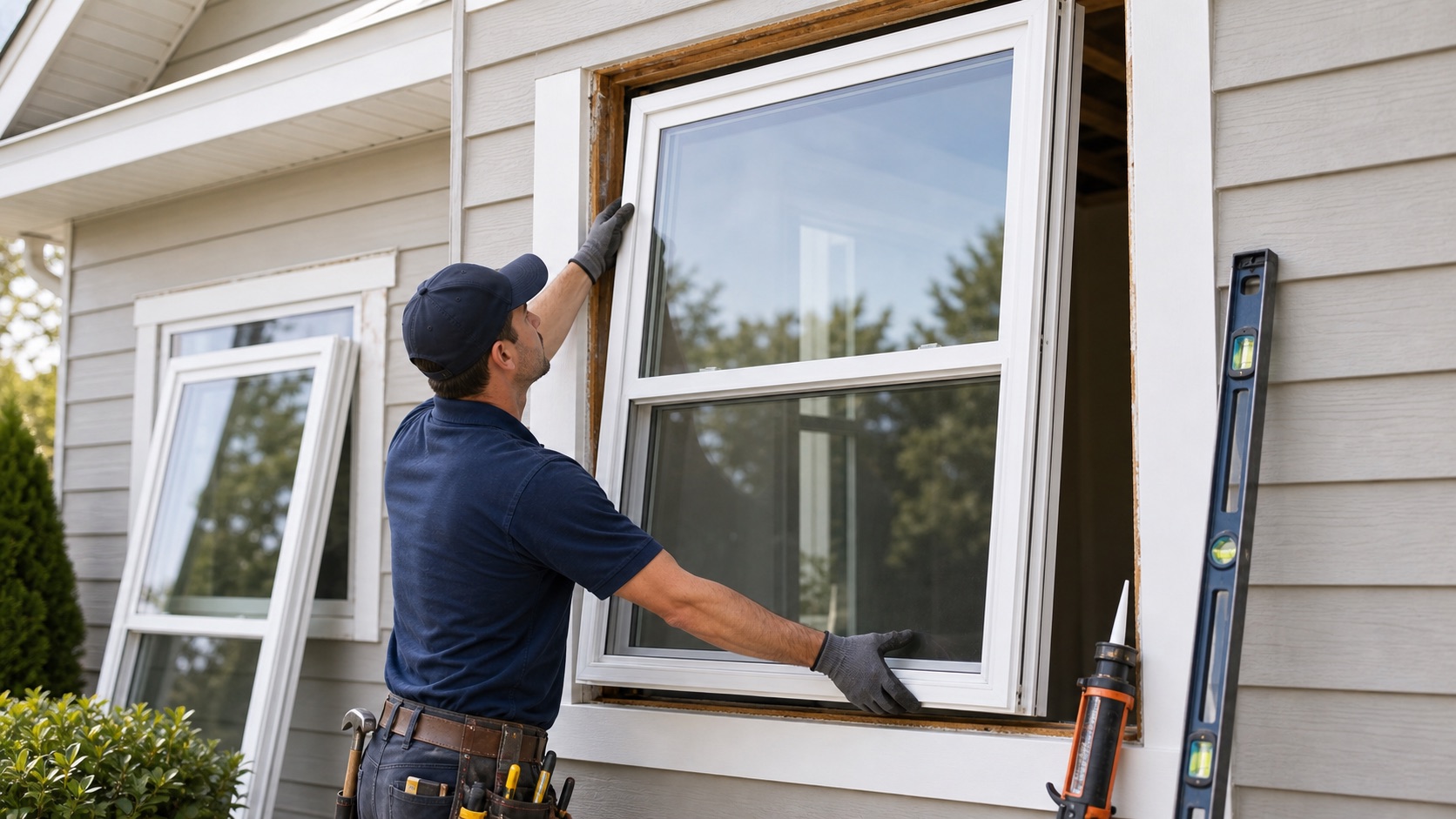
Most homeowners pay between $300 and $1,200 per window installed in 2026, with a national average of about $650. Replacing all the windows in a typical home runs $4,500 to $13,000. Frame material, window style, glass package, and whether you need insert or full-frame installation drive the biggest price swings. This guide breaks down exactly what you’ll pay and how to avoid overpaying.
How Much Does Window Replacement Cost per Window?
| Window Type | Cost per Window (installed) |
|---|---|
| Standard double-hung | $300 – $850 |
| Single-hung | $250 – $700 |
| Casement | $400 – $1,200 |
| Sliding | $350 – $1,000 |
| Picture / fixed | $300 – $1,200 |
| Awning | $400 – $1,100 |
| Bay / bow window | $1,200 – $4,500 |
| Egress (basement) | $1,000 – $5,000 |
| Impact / hurricane | $500 – $1,800 |
Sources: aggregated 2026 contractor quotes and national cost-data platforms, cross-checked against Bureau of Labor Statistics wage data for glaziers and construction laborers. Prices include the window unit and standard installation.
Double-hung windows are the standard for most American homes — both sashes slide vertically and tilt in for cleaning. Casement windows (crank-out) cost more because of their hardware but seal more tightly, making them a favorite in cold and windy climates. Picture windows are the cheapest per square foot of glass since they have no moving parts, but large custom sizes push them to the top of their range.
Window Replacement Cost by Frame Material
| Material | Cost per Window (installed) | Notes |
|---|---|---|
| Vinyl | $300 – $850 | Most popular, best value |
| Composite | $500 – $1,600 | Wood-look durability, efficient |
| Fiberglass | $500 – $1,500 | Strongest, low maintenance, 40+ yr lifespan |
| Aluminum | $400 – $1,200 | Slim frames, less insulating |
| Wood | $700 – $2,000 | Classic look, more upkeep |
| Clad-wood | $800 – $2,500 | Wood interior, low-maintenance exterior |
Vinyl dominates the replacement market for a reason: it delivers solid insulation and zero painting at the lowest price — see our full vinyl window replacement cost guide. Fiberglass costs roughly 30–50% more but expands and contracts at nearly the same rate as glass, so seals last longer. Wood remains the premium choice for historic and high-end homes; our wood window cost guide covers when it’s worth the upkeep. For a whole-home estimate, see cost to replace windows in a whole house.
Insert vs. Full-Frame Replacement: The Cost Difference Nobody Explains
This single decision can swing your project price by 50% or more, and many quotes don’t make it clear which one you’re getting.
- Insert (pocket/retrofit) replacement — $300–$850 per window. The new window slides into your existing frame. The original frame, trim, and siding stay untouched. It’s faster and cheaper, but you lose a little glass area and it only works if the existing frame is square and rot-free.
- Full-frame replacement — $600–$1,500+ per window. The entire window — frame, trim, and all — comes out down to the rough opening. It costs 25–50% more, but it’s the only correct fix for rotted frames, water damage, or out-of-square openings, and it lets the installer add fresh flashing and insulation around the opening.
If an installer quotes you a full-frame price for windows with healthy frames, ask why. If another quotes insert pricing for visibly rotted frames, walk away — the rot stays hidden behind the new window.
What Do U-Factor and SHGC Mean? (And Which One Matters for You)
Every certified window carries a label from the National Fenestration Rating Council (NFRC) with two numbers that matter:
- U-factor measures how well the window keeps heat in. Lower is better. In cold climates (Minneapolis, Chicago), prioritize a U-factor of 0.30 or below — see our Minneapolis and Chicago pricing guides.
- SHGC (Solar Heat Gain Coefficient) measures how much solar heat the window lets through. Lower is better in hot climates. In Phoenix or Texas, a low SHGC (0.25 or below) matters far more than U-factor — see window replacement cost in Phoenix.
The Department of Energy recommends choosing windows by climate zone rather than paying for the “best” rating across the board. A triple-pane, ultra-low U-factor window is money well spent in Minnesota and largely wasted in Arizona.
Energy Savings, Tax Credits, and Rebates
ENERGY STAR certified windows can cut household heating and cooling bills by 10–25% compared to single-pane windows. Better yet, the federal Energy Efficient Home Improvement Credit covers 30% of the cost of qualifying ENERGY STAR Most Efficient windows, up to $600 per year — details at the ENERGY STAR federal tax credits page. Many utilities stack local rebates on top. See energy-efficient windows cost for the full savings math.
Beware the In-Home Window Sales Pitch
The replacement window industry is notorious for high-pressure, in-home sales — arguably the most aggressive of any home-improvement category. Classic warning signs:
- A “free estimate” that turns into a 2–3 hour presentation.
- An inflated “list price” ($2,000+ per window) followed by a dramatic “today-only” discount.
- Pressure to sign before the rep leaves your house.
- Refusal to leave a written quote for you to compare.
A legitimate quote is valid for weeks, not minutes. Read our guide to contractor high-pressure sales tactics before you book a single appointment, and always verify the contractor’s license before signing anything.
Repair or Replace?
A single foggy or cracked pane may just need glass replacement ($150–$600), not a whole new window. But for drafts, rot, or failing seals across many windows, replacement is smarter — see window repair or replace and signs you need new windows.
How to Save on Window Replacement
- Replace multiple windows at once — per-window pricing drops meaningfully at 8–10+ windows.
- Choose vinyl for the best cost-to-value ratio.
- Match the glass package to your climate instead of buying the top tier everywhere.
- Claim the $600 federal tax credit plus any utility rebates.
- Get 3 written quotes and never sign during the first visit — see questions to ask a window installer and how to find a contractor near you.
Frequently Asked Questions
How much does it cost to replace one window? $300–$1,200 installed on average, depending on type, material, and glass. The national average is about $650. Specialty windows like bay or egress run $1,200–$5,000.
How much does it cost to replace all windows in a house? $4,500–$13,000 for a typical home, depending on the number of windows and materials. See whole-house window cost.
What is the cheapest window material? Vinyl is the most affordable and the best value for most homes, balancing price, efficiency, and low maintenance.
Are new windows worth the cost? Often yes — they cut energy bills 10–25%, improve comfort and noise, and boost home value, with a federal tax credit of up to $600/year for ENERGY STAR Most Efficient models.
Should I repair or replace a window? Replace a single cracked/foggy pane with glass replacement; replace the whole window for drafts, rot, or widespread seal failure.
Last updated: June 2026. Pricing reflects national averages compiled from contractor quotes, cost-data aggregators, and BLS occupational wage data. Efficiency and tax-credit information sourced from ENERGY STAR, the U.S. Department of Energy, and the NFRC. Always get a written quote from a licensed installer.