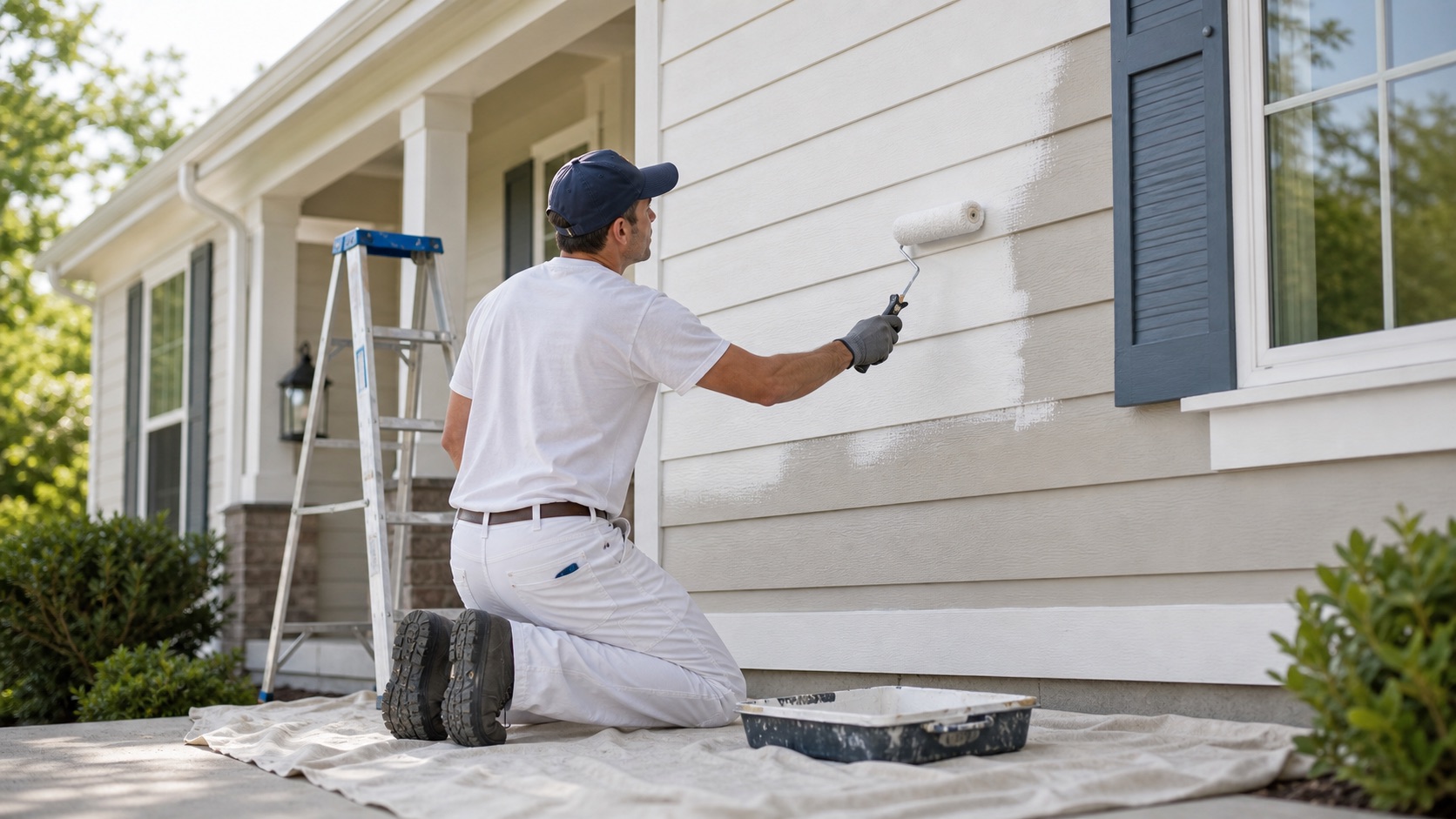
Painting a house costs $2 to $6 per square foot in 2026. Interior painting averages $2,000 to $6,000 for a typical home, while exterior painting runs $3,000 to $8,000. Labor accounts for 70–85% of the total, so home size, prep work, stories, and paint quality drive your final price more than the paint itself.
What Does House Painting Cost at a Glance?
| Project | Typical Cost |
|---|---|
| Interior (whole home) | $2,000 – $6,000 |
| Exterior (whole home) | $3,000 – $8,000 |
| Single room | $350 – $1,000 |
| Kitchen cabinets | $1,000 – $4,000 |
| Trim & doors | $1 – $4 per linear ft |
| Ceiling | $1 – $3 per sq ft |
| Deck | $500 – $1,500 |
| Fence | $750 – $4,500 |
Where these numbers come from: 2026 national averages including labor and materials, cross-referenced against Bureau of Labor Statistics wage data for painters and published contractor pricing. Labor is 70–85% of the cost — see painter rates.
How Much Does It Cost to Paint a House by Size?
| Home Size | Interior | Exterior |
|---|---|---|
| 1,000 sq ft | $1,500 – $3,500 | $1,500 – $4,000 |
| 1,500 sq ft | $2,000 – $4,500 | $2,500 – $5,500 |
| 2,000 sq ft | $3,000 – $6,000 | $3,500 – $7,000 |
| 2,500 sq ft | $3,500 – $7,500 | $4,500 – $9,000 |
| 3,000+ sq ft | $4,500 – $10,000 | $6,000 – $12,000 |
Where these numbers come from: Ranges reflect typical 2026 quotes for two coats on prepared surfaces. Your paintable wall area — not floor area — is what painters actually measure, which is why two homes with identical floor plans can get different quotes.
Local labor rates shift these ranges significantly. Compare our city guides: Phoenix, Denver, and Seattle.
Why Is Painting Mostly a Labor Cost?
Painting is one of the most labor-heavy home services: 70–85% of your bill pays for people, not paint. According to the BLS Occupational Employment and Wage Statistics (May 2025), construction and maintenance painters earn a median wage in the low-to-mid $20s per hour nationally — and contractors bill that out at $50–$100+ per hour once insurance, overhead, and profit are added.
The math explains a lot of quote behavior:
- A 2,000 sq ft interior needs roughly 15–20 gallons of paint ($450–$1,200 in materials) but 40–80 hours of labor ($2,000–$5,000+).
- High-cost metro areas (Seattle, Denver) quote 20–40% above national averages almost entirely because of wages.
- Anything that adds hours adds cost — prep, tall walls, color changes, detail work.
This is also why DIY saves so much on simple jobs, and why “cheap” quotes usually mean the crew plans to skip hours of prep.
What Determines House Painting Cost?
- Square footage of paintable surface — walls and siding area, not floor space.
- Prep work — the hidden 50%. Patching, sanding, caulking, scraping, and priming can consume half the labor hours on an older home. Quotes that differ by thousands usually differ on prep, not paint. Learn to compare contractor bids line by line.
- Stories and height. Each additional story adds 25–50% to exterior cost due to ladders, scaffolding, and slower, riskier work.
- Siding material. Porous stucco drinks paint; wood needs scraping and priming; vinyl needs vinyl-safe formulas.
- Number of coats. Dark-to-light color changes can require primer plus two or three coats.
- Paint quality ($30–$80+/gallon — more below).
- Local labor rates — see our city guides.
Does Paint Quality Actually Matter? ($30 vs. $80 a Gallon)
Yes — but not the way paint ads suggest. Here’s the honest difference:
| Tier | Price/Gallon | What You Get |
|---|---|---|
| Builder/contractor grade | $20 – $35 | Thin coverage, often needs 3 coats, scuffs easily, exterior life 4–6 years |
| Mid-grade | $35 – $55 | Good coverage in 2 coats, washable, exterior life 7–10 years |
| Premium | $55 – $80+ | Better hide (sometimes 1–2 coats), stain resistance, exterior life 10–15 years |
Where these numbers come from: Manufacturer retail pricing and independent paint testing published by consumer-testing organizations, which consistently find mid-grade and premium paints from major brands outperform budget lines in coverage and durability — and that the most expensive can isn’t always the top performer.
Because labor dominates the bill, upgrading paint adds only $200–$600 to a whole-home job but can double the repaint interval. Premium paint with a cheap rushed application, however, still fails early — prep beats paint.
Do Pre-1978 Homes Cost More to Paint?
Often yes — and for a legitimate, legal reason. If your home was built before 1978, federal law requires any contractor disturbing painted surfaces to be certified under the EPA’s Lead Renovation, Repair and Painting (RRP) Rule. Certified firms must use lead-safe work practices: containment plastic, HEPA cleanup, and proper disposal.
What this means for your quote:
- Expect $200–$1,000+ in added cost for testing, containment, and cleanup on jobs involving scraping or sanding.
- A non-certified low bid is a red flag, not a bargain — firms face penalties of tens of thousands of dollars per violation, and you inherit the dust hazard.
- Verify certification the same way you’d verify a contractor’s license — ask for the firm’s RRP certificate number.
Should You DIY or Hire a Painter?
DIY eliminates the 70–85% labor share, so a $4,000 interior job might cost $600–$900 in materials and equipment. The trade-offs: a whole-home interior takes most homeowners 1–2 weeks of evenings and weekends versus 2–4 days for a crew, and exteriors above one story carry real fall risk.
Good DIY candidates: single rooms, standard 8-foot ceilings, walls already in good shape. Hire out: full exteriors, tall stairwells, heavy prep, and any pre-1978 scraping work. See DIY vs. hiring a painter and estimate materials with our paint calculator guide.
How Often Should You Repaint?
Interiors last 5–10 years depending on traffic; exteriors last 4–15 years depending on climate, siding, and paint tier. Intense sun (Phoenix) and constant moisture (Seattle) shorten exterior life. See how often should you paint a house.
How Can You Save on House Painting?
- Get 3 written quotes with prep work itemized — then compare the bids properly.
- Hire professionally. The Painting Contractors Association maintains industry standards and a contractor directory; membership signals a firm that follows written craftsmanship standards.
- Paint in the off-season — late fall and winter for interiors often brings 10–15% discounts.
- Do your own prep — move furniture, remove outlet covers, handle light patching.
- Buy quality paint — fewer coats and longer life beat saving $15 a gallon.
- Vet the crew — see questions to ask a painter and how to find a good painter near you.
Frequently Asked Questions
How much does it cost to paint a house? About $2–$6 per square foot. Interior averages $2,000–$6,000 and exterior $3,000–$8,000 for a typical home, with labor making up 70–85% of the total.
Is it cheaper to paint inside or outside? Interior is usually cheaper per project because exteriors need pressure washing, scraping, priming, weatherproof paint, and ladder or scaffold work for height.
How much of painting cost is labor? About 70–85%, anchored to painter wages tracked by the BLS. That’s why DIY saves the most and why doing your own prep lowers the bill.
Do I need a special painter for a pre-1978 home? Yes — federal law requires an EPA Lead-Safe Certified firm for any work that disturbs paint in homes built before 1978. Expect a modest, legitimate cost increase.
Does a fresh paint job add home value? Yes — especially exterior and cabinet painting, which boost curb appeal and consistently rank among the highest-ROI pre-sale upgrades.
Last updated: June 2026. National averages for informational purposes. Sources: U.S. Bureau of Labor Statistics, Occupational Employment and Wage Statistics (May 2025); U.S. EPA Lead Renovation, Repair and Painting Program; Painting Contractors Association. Always get a written quote from a licensed, insured painter.